How Hard Is the CCNA 200-301? Difficulty, Study Time and Where People Lose Marks
Skip the guessing - find out how hard it is for you
A complete CCNA 200-301 practice exam: 103 questions in 120 minutes, an explanation and Exam Tip on every item and an Exam Coach report that ranks your weakest domains.
CCNA-EXAM-FULL
Try a free CCNA exam
Already have an account? Log in to redeem
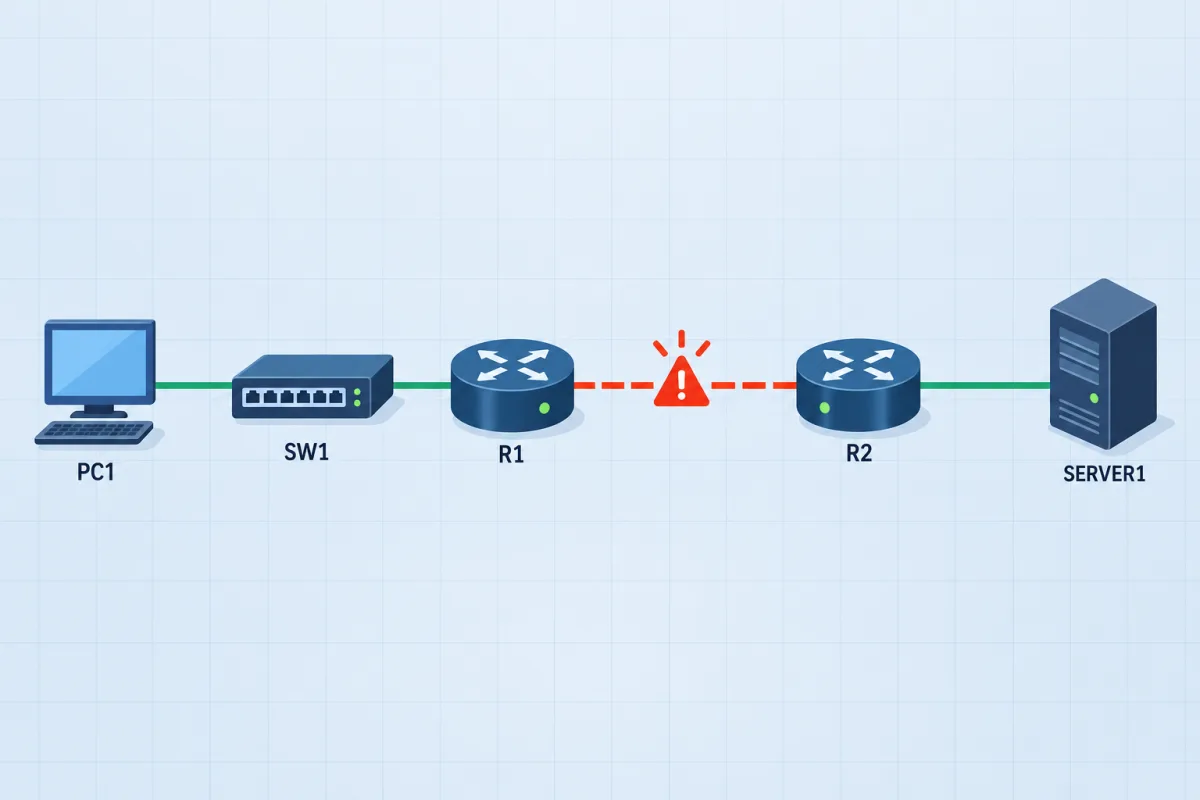 WANFree with the code
Branch Office Connectivity Failure
A branch PC has lost access to the head-office server. Work through the path, find what is wrong, and fix it.
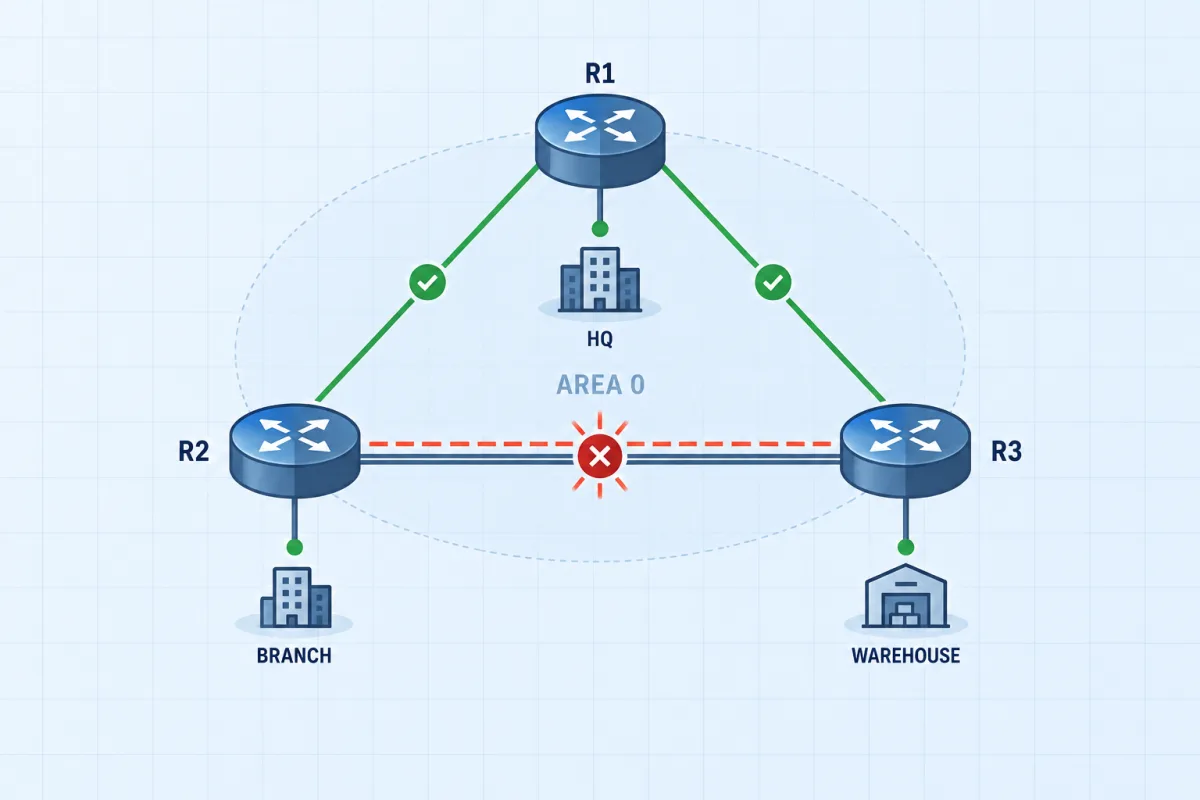 OSPF
OSPF
Three Sites on OSPF
One site has dropped out of the routing domain. Find out why the adjacency will not form and bring the site back.
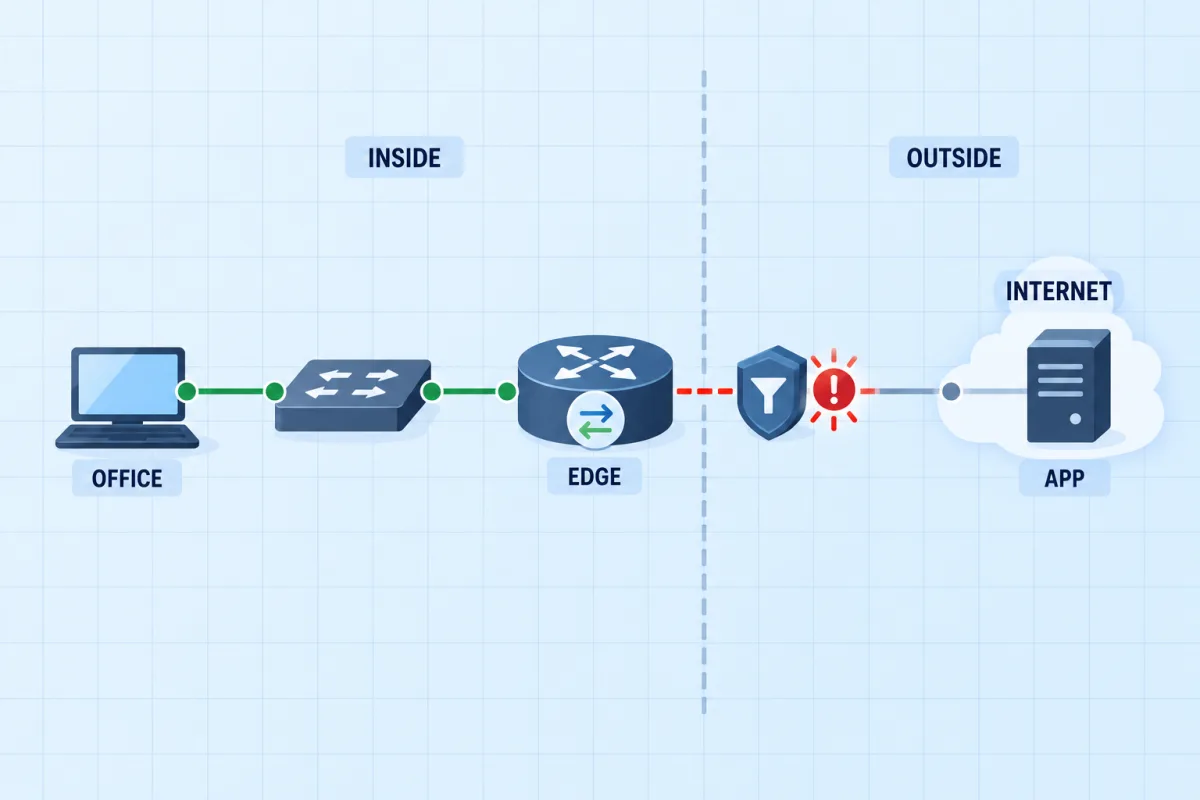 NAT & ACLs
The Office Edge: NAT and a Filter
Since a change window, nobody on the LAN can reach the hosted application. Work out which half of the edge is broken.
3 of the 9 CCNA scenarios in the pack, each a live network with one hidden fault. See all nine.
The CCNA 200-301 is hard for a first certification but very passable with a plan. One exam covers six domains, includes hands-on simulations, and does not let you return to a question once you move on. Plan on roughly 120-250 hours of study, about 2 to 6 months at 10-15 hours a week, and more if you are new to IT. On full-length FigigExams CCNA practice papers, candidates answered 57.5% of 4,188 domain-tagged questions correctly, and IP Connectivity cost the most marks.Compiled 12 October 2026 by FigigExams from 17 candidates' practice answers, 22-31 August 2026.
In this guide
Five things that make the CCNA hard
- Breadth in one sitting. Six domains, from cabling and switching to OSPF, NAT, wireless, security and automation, all in a single exam. Most first certifications split this or go less deep.
- Hands-on items. Some questions put you in a simulated device and ask you to configure or troubleshoot it. Knowing a command is not enough; you have to know which one, on which interface, in which mode.
- No going back. Once you click Next, the answer is final. You cannot flag a question and return to it, so a slow subnet calculation costs time you never recover.
- A clock that rewards speed. 120 minutes for what candidates report as roughly 100 to 120 items, some of them multi-step. Subnetting has to be automatic, not worked out.
- A target you cannot see. Cisco publishes neither the question count nor the passing score, so the only honest bar is clearing unseen full-length papers with margin.
Which CCNA domains are hardest, measured
Measured across 4,188 domain-tagged answers from 17 candidates on full-length FigigExams CCNA papers between 22 and 31 August 2026. These are practice papers, not the real exam. Weighted shortfall is the domain's exam weight multiplied by the share of its questions answered wrong.
| Domain | Exam weight | Answers | Accuracy | Weighted shortfall |
|---|---|---|---|---|
| IP Connectivity | 25% | 987 | 60.0% | 10.0 pts |
| Network Access | 20% | 616 | 56.0% | 8.8 pts |
| Network Fundamentals | 20% | 926 | 56.3% | 8.8 pts |
| Security Fundamentals | 15% | 699 | 55.4% | 6.7 pts |
| Automation and Programmability | 10% | 473 | 58.6% | 4.1 pts |
| IP Services | 10% | 487 | 58.7% | 4.1 pts |
Overall accuracy was 57.5%. Security Fundamentals has the lowest accuracy (55.4%), but IP Connectivity costs the most marks because it carries a quarter of the exam. Across 67 engaged CCNA attempts between 4 March and 31 August 2026, the median score was 64% and the median sitting took 102 minutes. Method: where candidates lose marks and what a normal practice score is.
How long it takes to study for the CCNA
Planning ranges, not a measured statistic. Each adds up one complete video course, a book pass on the weak domains, lab time on every configuration topic, and four or five timed full-length papers with review.
| Starting point | Study hours | At 10 hours a week | At 15 hours a week |
|---|---|---|---|
| New to IT | 200-300 | 20-30 weeks | 14-20 weeks |
| IT support, helpdesk or Network+ | 120-200 | 12-20 weeks | 8-14 weeks |
| Already configuring Cisco switches and routers at work | 60-120 | 6-12 weeks | 4-8 weeks |
The part people under-budget is the end. Five full-length papers at 120 minutes each, plus about as long again reviewing every miss, is roughly 20 hours on its own, and it is the part that shows whether the earlier hours worked. Working full time? The 12-week plan for helpdesk career-switchers and the 30-day final plan lay the weeks out.
CCNA difficulty compared with nearby certifications
Practice-paper accuracy is not comparable across certifications (different banks, different candidates), so this compares what each exam asks you to do.
| Exam | What it tests | Hands-on format | Compare |
|---|---|---|---|
| CompTIA Network+ N10-009 | Vendor-neutral networking concepts and troubleshooting | PBQs | CCNA vs Network+ |
| Cisco CCNA 200-301 | Networking concepts plus Cisco IOS configuration and verification | Simulations in a CLI | This page |
| CompTIA Security+ SY0-701 | Security concepts, operations and governance | PBQs | How hard is Security+? |
| Cisco CCNP ENCOR 350-401 | Enterprise depth: BGP, multi-area OSPF, SD-WAN, security, automation and AI | Simulations | CCNA vs CCNP |
Does v2.0 make it harder?
v2.0 starts on 3 February 2027 (v1.1 runs until 2 February) and brings troubleshooting back into the blueprint, so expect more diagnosis questions. If you can sit before the switch, study v1.1 with any current resource. What moves between the versions: CCNA v2.0 changes. A FigigExams pack includes future versions at no extra cost.
How to tell you are ready
- Unseen papers, not repeats. A score on a paper you have seen before measures memory. Clear the bar on papers you have not met.
- IP Connectivity first. It is the costliest domain above; a weak routing domain is a failing exam.
- Subnetting in under a minute. If you get subnet questions right but slowly, you are not done.
The full rubric and a 105-question readiness test: Am I ready for the CCNA?
Measure your own difficulty, not ours
103 questions in 120 minutes with an Exam Coach report that ranks your domains by the marks they cost. Free, no credit card.
Try a free CCNA examThe full CCNA pack is $39 once: 5 exams, 510 questions and 9 troubleshooting labs, lifetime, future versions included.
Frequently asked questions about CCNA difficulty
Is the CCNA hard for beginners?
Yes, it is one of the harder first certifications, because one exam covers six domains, includes hands-on simulations and does not let you go back to a question. It is very passable with a plan: most beginners need roughly 200-300 hours of study, about 14 to 30 weeks at 10-15 hours a week.
How many hours does it take to study for the CCNA?
Roughly 120-250 hours for most candidates: about 200-300 hours if you are new to IT, 120-200 if you already work in IT support or hold Network+, and 60-120 if you configure Cisco gear at work. These are planning ranges, not a measured statistic.
Can I pass the CCNA in one month?
Only if you already work with Cisco networks and use the month for revision and timed full-length practice. From scratch, one month is not enough to cover six domains and build subnetting speed.
What is the hardest part of the CCNA?
IP Connectivity costs candidates the most marks: on full-length FigigExams papers in August 2026 it was answered 60.0% correctly and, at 25% of the exam, cost 10.0 points. Security Fundamentals had the lowest accuracy at 55.4%. Subnetting speed and the no-going-back rule are the other common traps.
What is the CCNA pass rate?
Cisco does not publish a pass rate, a passing score or a question count, so any pass-rate figure online is an estimate. The useful measure is your own score on unseen full-length practice papers.
Is the CCNA harder than Network+?
Generally yes. Network+ tests vendor-neutral concepts; the CCNA adds Cisco IOS configuration and simulations, and covers routing and switching in more depth. Many candidates take Network+ first, but it is not a prerequisite.